Nintendo Switch 2 New Gameplay Concepts Revealed Through Latest Rumors
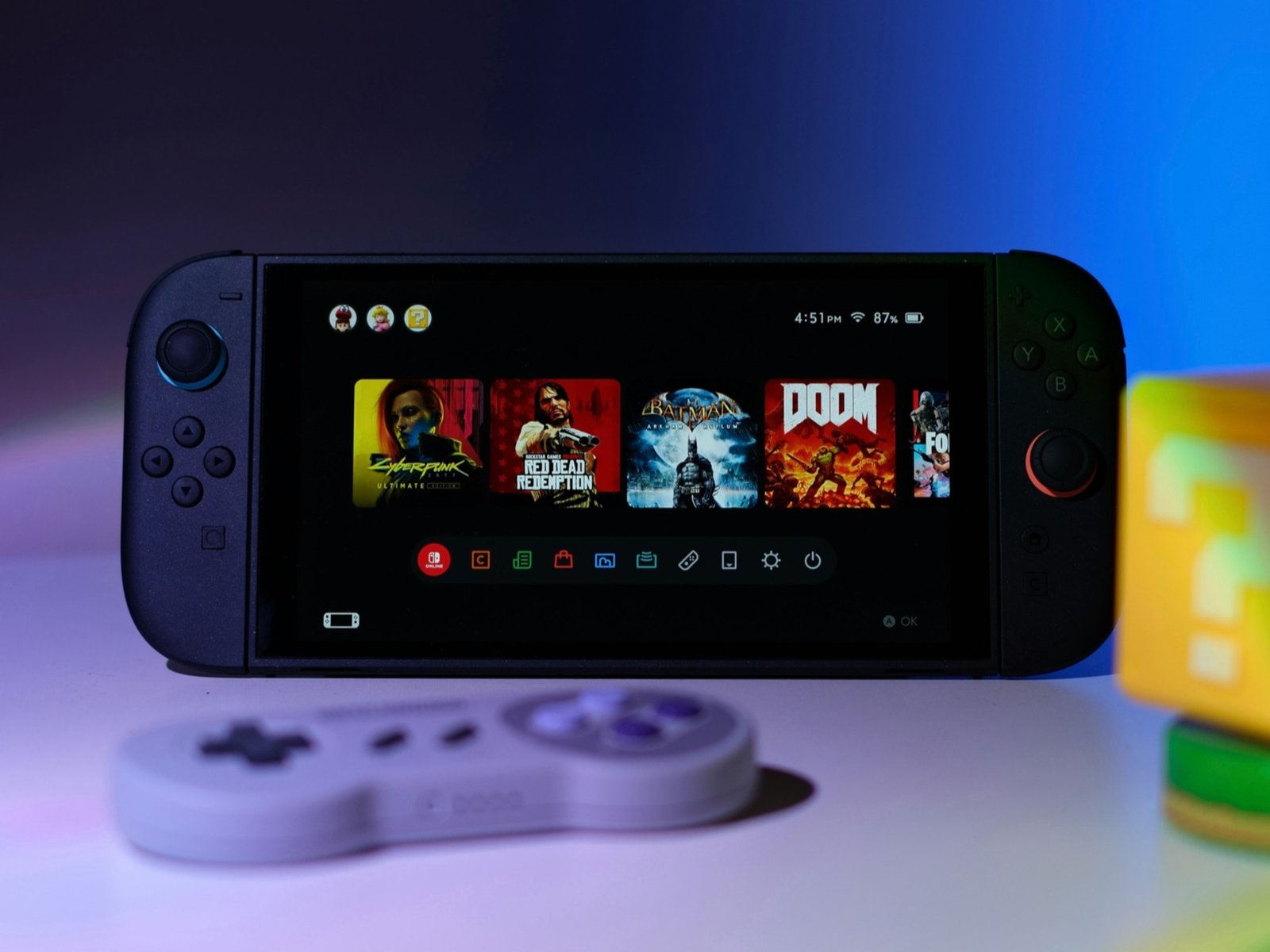
Nintendo Explores Fresh Gameplay Ideas for Switch 2
Nintendo is currently experimenting with new ways to play on the Switch 2 according to recent industry reports. While the Kyoto-based company keeps specific details under tight wraps the console’s rumored features offer compelling clues about where the hybrid platform might be heading. The original Nintendo Switch revolutionized gaming by blending handheld portability with traditional TV play. Its successor faces the challenge of evolving that formula without losing the magic that made the first model a hundred million unit seller.
Hardware Foundation Enables New Possibilities
Leaked specifications suggest the Switch 2 will utilize a custom NVIDIA Tegra T239 processor built on Samsung 8nm process technology. This chip reportedly delivers significant performance gains over the original Tegra X1 found in the launch Switch. With 12GB of LPDDR5 RAM and UFS 3.1 storage the new hardware could support features impossible on current hardware. Developers familiar with development kits mention the system targets 1080p sixty frames per second in handheld mode and 4K output when docked using NVIDIA DLSS upscaling technology.
This performance ceiling opens doors for gameplay concepts requiring more computational muscle. Physics based interactions larger persistent worlds and advanced AI routines become feasible. The original Switch’s limitations forced creative workarounds. The Switch 2’s headroom lets developers implement ideas previously reserved for PlayStation 5 or Xbox Series X.
Redesigned Joy-Con Controllers Hint at New Interactions
Multiple sources describe magnetic attachment mechanisms replacing the current rail system on Joy-Con controllers. This change alone suggests Nintendo plans new form factors or attachment styles. Hall effect joysticks would eliminate drift issues plaguing current controllers while enabling more precise input detection. Some patents show Joy-Con controllers functioning as standalone mice when placed on flat surfaces. Others depict controllers with built-in cameras for augmented reality applications.
The original Joy-Con’s HD Rumble and IR camera saw limited use beyond launch titles like One Two Switch. Nintendo may finally leverage these technologies more deeply with improved versions. Motion controls could return as a core pillar rather than an optional feature especially if the new hardware tracks movement with greater fidelity.
Backwards Compatibility Shapes Design Decisions
Nintendo confirmed backwards compatibility with Nintendo Switch software early in the development cycle. This commitment constrains and guides new gameplay concepts. Any new control scheme must gracefully handle existing games. The magnetic Joy-Con design reportedly maintains the same button layout and spacing ensuring muscle memory transfers directly. However the enhanced sensors and potential new input methods create opportunities for enhanced versions of current titles.
Games like The Legend of Zelda Breath of the Wild and Tears of the Kingdom could receive patches adding gyro aiming improvements or haptic feedback tailored to specific surfaces. Metroid Prime 4 Beyond might showcase new pointer controls using the revised Joy-Con cameras. This approach mirrors how Wii games benefited from Wii MotionPlus without breaking compatibility.
Competitive Landscape Influences Direction
The handheld PC market evolved dramatically since the Switch launched in 2017. Valve’s Steam Deck OLED and Steam Deck LCD models proved demand exists for premium portable PC gaming. ASUS ROG Ally X and Lenovo Legion Go push Windows handhelds toward mainstream viability. These devices offer desktop class performance but lack Nintendo’s first party exclusives and curated ecosystem.
Nintendo’s response appears focused on differentiated experiences rather than raw specification battles. The company’s history shows willingness to sacrifice horsepower for unique gameplay. Wii succeeded despite weaker hardware than PlayStation 3. Nintendo DS dominated PSP through touchscreen innovation. Switch 2 likely follows this philosophy leveraging its hybrid nature and exclusive software library.
Potential Launch Window and Pricing Strategy
Industry analysts converge on a 2025 launch window possibly March to align with Nintendo’s fiscal year end. Pricing rumors suggest three hundred ninety nine US dollars for a base model matching the Steam Deck OLED starting price. A premium SKU with OLED screen and larger storage could reach four hundred forty nine dollars. This positions Switch 2 competitively against both Steam Deck variants and the upcoming PlayStation 5 Pro.
Nintendo typically reveals hardware six to nine months before launch. A formal announcement could arrive as early as late 2024 with hands on events following in early 2025. The company’s Direct presentation format allows controlled messaging highlighting new gameplay concepts without technical specification deep dives.
What This Means for Players and Developers
For players the Switch 2 represents evolution not revolution. The hybrid concept remains intact but refined with modern technology. New gameplay concepts will likely enhance existing genres rather than invent entirely new ones. Developers gain a more capable platform reducing porting friction for multiplatform titles. Nintendo’s first party studios receive tools to realize ambitions constrained by current hardware.
The experimentation phase described in reports suggests Nintendo tests multiple concepts simultaneously. Not every idea reaches consumers. However the company’s track record of turning prototypes into beloved features inspires confidence. Whether through magnetic controllers enhanced motion tracking or entirely new interaction paradigms the Switch 2 aims to surprise while feeling familiar.