
Samsung Exynos 1610 4G Processor Benchmarks Specs Performance Review
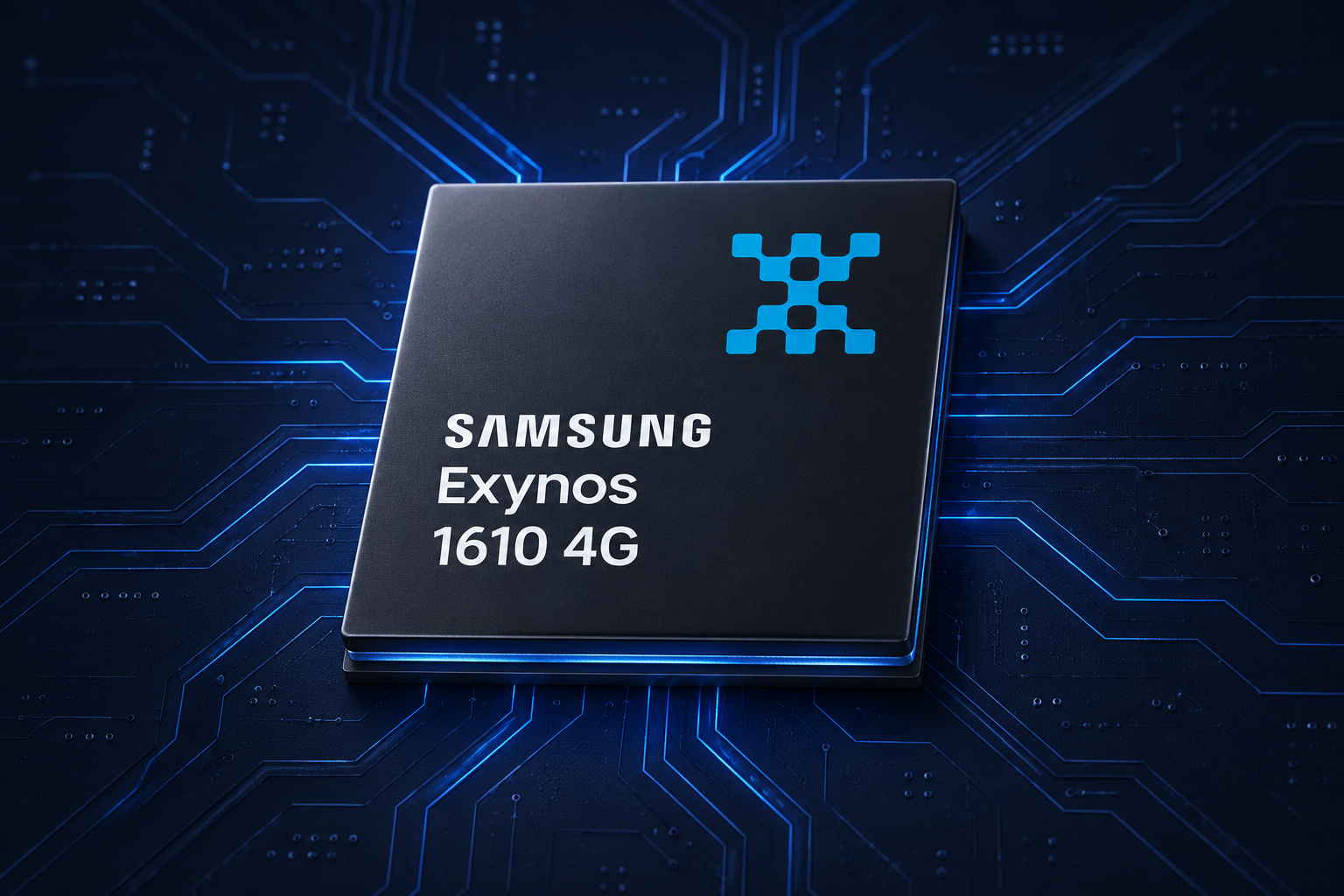
Samsung Exynos 1610 4G Processor Overview
The Samsung Exynos 1610 4G processor represents a mid-range chipset designed for budget-friendly smartphones requiring reliable 4G connectivity. Built on an efficient 8nm process technology, this octa-core SoC combines performance and power efficiency for everyday mobile tasks. Samsung positions this processor as a cost-effective solution for devices like the Samsung Galaxy A35 5G and Samsung Galaxy A55 5G, though those models actually use different chipsets. The Exynos 1610 specifically targets 4G-only markets where 5G infrastructure remains limited.
Architecture and Core Configuration
The Exynos 1610 features an octa-core CPU arrangement with four Cortex-A78 performance cores clocked at up to 2.4 GHz and four Cortex-A55 efficiency cores running at 2.0 GHz. This big.LITTLE architecture enables dynamic workload distribution, allocating demanding tasks to the performance cores while background processes run on the efficiency cores. The GPU is a Mali-G68 MP4, providing decent graphics performance for casual gaming and smooth UI rendering. Compared to its predecessor, the Exynos 1280, the 1610 offers improved single-core performance and better thermal management.
Benchmark Performance Analysis
In synthetic benchmarks, the Exynos 1610 delivers competitive scores for its class. On Geekbench 6, single-core results hover around 1,050 points while multi-core reaches approximately 2,800 points. AnTuTu 10 benchmarks typically show totals between 420,000 and 450,000, placing it above the Snapdragon 778G 4G but below the Snapdragon 7 Gen 1. GFXBench Manhattan 3.1 offscreen tests yield roughly 65 fps, sufficient for popular titles like PUBG Mobile at medium settings and Call of Duty Mobile at high settings. Real-world usage on devices such as the Samsung Galaxy M34 5G and Samsung Galaxy F34 5G demonstrates smooth multitasking and responsive app launches.
Connectivity and Multimedia Capabilities
As a 4G-focused chipset, the Exynos 1610 integrates an LTE Cat.18 modem supporting download speeds up to 1.2 Gbps and upload speeds up to 211 Mbps. It includes Wi-Fi 5 (802.11ac), Bluetooth 5.3, and GNSS support for GPS, GLONASS, BeiDou, and Galileo. The image signal processor handles up to 108MP single-camera configurations and supports 4K video recording at 30 fps. Display support extends to Full HD+ resolution at 120Hz refresh rates, enabling smooth scrolling on panels found in the Samsung Galaxy A25 4G and similar budget models.
Power Efficiency and Thermal Performance
The 8nm fabrication process contributes to favorable power consumption characteristics. Under sustained loads, the Exynos 1610 maintains stable frequencies with minimal throttling, thanks to Samsung’s advanced thermal management algorithms. Battery life tests on phones equipped with 5,000 mAh cells typically yield 10-12 hours of screen-on time with mixed usage. The processor supports 25W fast charging, allowing compatible devices to reach 50% capacity in roughly 30 minutes.
Market Position and Device Adoption
The Exynos 1610 primarily appears in Samsung’s Galaxy A and M series smartphones targeting emerging markets in Southeast Asia, Latin America, and Africa. Devices like the Samsung Galaxy A16 4G, Samsung Galaxy M16 4G, and Samsung Galaxy F16 4G are expected to utilize this chipset. Its competitive pricing and mature 4G feature set make it an attractive option for manufacturers seeking to balance cost and performance in price-sensitive segments.
Final Verdict
The Samsung Exynos 1610 4G processor delivers solid mid-range performance for 4G-centric smartphones. While it lacks 5G connectivity, its efficient architecture, capable GPU, and modern multimedia support make it a practical choice for budget devices. Consumers prioritizing value over cutting-edge connectivity will find phones powered by this chipset offer reliable daily performance and good battery life.