Philips Evnia 27M4N8500V Gaming Monitor Features QD-OLED 360Hz Panel
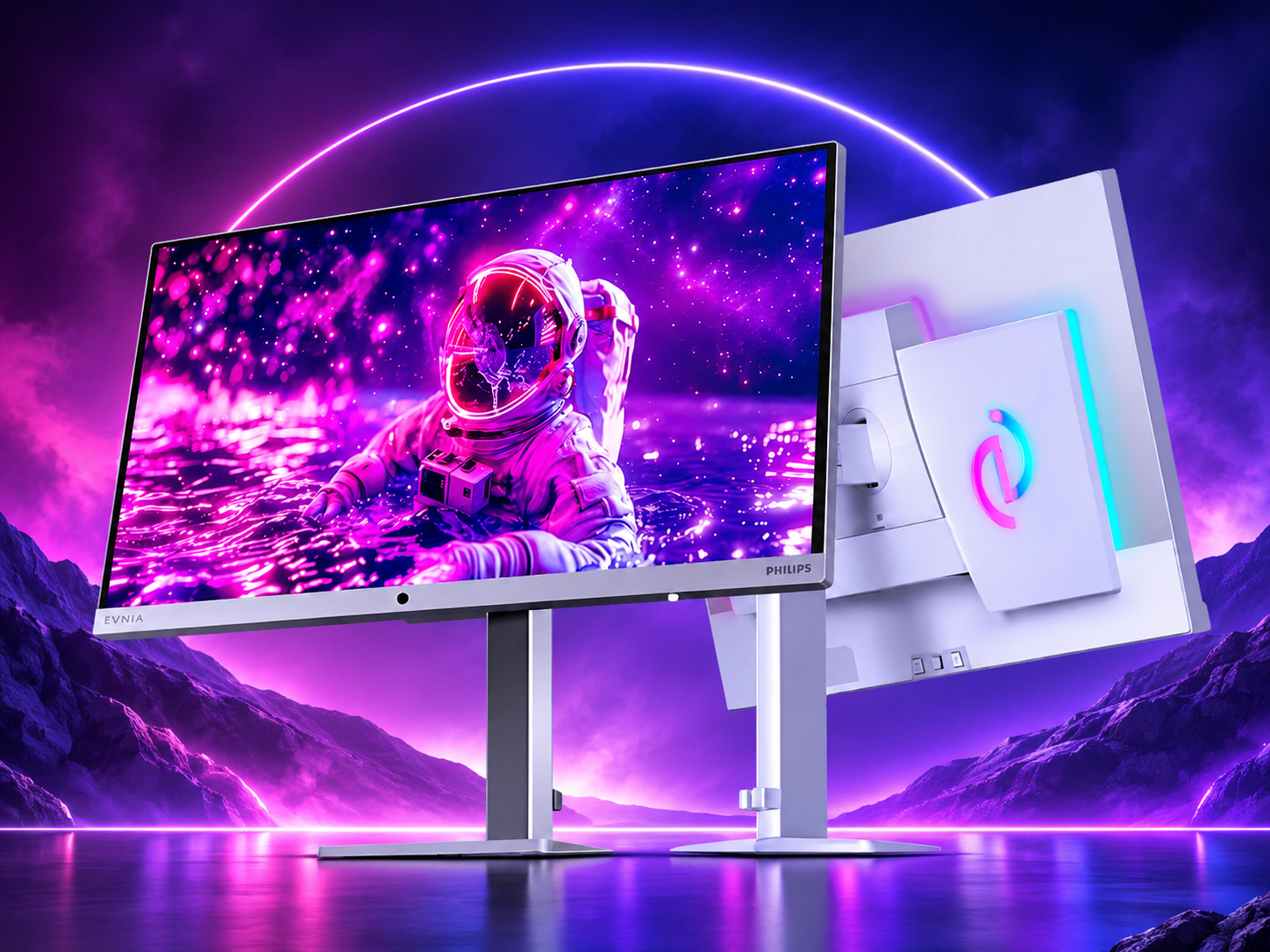
Philips Expands Evnia Line with High-Performance QD-OLED Monitor
Philips has announced the Evnia 27M4N8500V, a new gaming monitor targeting competitive players who demand speed and visual fidelity. The model debuts in China and brings together a QD-OLED panel, a 360 Hz refresh rate, and a 0.03 ms response time. These specifications place it among the fastest displays currently available for esports and high-refresh gaming.
QD-OLED Technology Combines Color Volume With Perfect Blacks
The Evnia 27M4N8500V uses a quantum-dot OLED panel. This technology merges the self-emissive properties of OLED — perfect blacks and infinite contrast — with a quantum-dot layer that expands color volume and peak brightness. The result is a display that can render HDR highlights vividly while maintaining the deep shadow detail that OLED is known for. For gamers, this means more realistic explosions, brighter specular highlights, and clearer visibility in dark scenes without the gray glow typical of traditional LCD backlights.
360 Hz Refresh Rate and 0.03 ms Response Time Target Competitive Play
A 360 Hz refresh rate updates the image 360 times per second, significantly reducing motion blur and input latency compared to standard 144 Hz or 240 Hz panels. Paired with a 0.03 ms gray-to-gray response time, the monitor can transition pixels almost instantly, minimizing ghosting during fast camera movements. These figures are especially valuable in titles like Counter-Strike 2, Valorant, and Overwatch 2, where millisecond advantages can affect outcome. The combination also supports variable refresh rate technologies to eliminate tearing without adding latency.
Built-In CMOS Sensor Adds Presence Detection
An unusual addition is a built-in CMOS sensor that detects human presence in front of the screen. While Philips has not detailed every use case, such sensors typically enable power-saving features — dimming or turning off the panel when no user is detected — and can trigger security locks or automatic input switching. In a gaming context, the sensor could also pause content or mute audio when the player steps away, then resume seamlessly upon return. This feature reflects a broader trend of integrating smart sensors into desktop displays for both convenience and energy efficiency.
Market Positioning and Availability
The Evnia 27M4N8500V launches first in China, with no confirmed global release date or pricing at the time of writing. Given its specification sheet, the monitor will likely compete with other 27-inch QD-OLED models from brands such as Alienware, MSI, and ASUS ROG. Philips positions the Evnia series as a premium gaming sub-brand, so the 27M4N8500V is expected to carry a price reflecting its high-end panel and refresh rate. Potential buyers outside China should watch for regional announcements in the coming months.
Final Thoughts
With the Evnia 27M4N8500V, Philips delivers a specification set that checks every box for competitive gaming: QD-OLED image quality, 360 Hz motion clarity, and near-instantaneous pixel response. The CMOS presence sensor adds a layer of smart functionality that may appeal to both enthusiasts and environmentally conscious users. Until independent reviews test real-world performance — including HDR brightness, uniformity, and firmware polish — the monitor remains a promising but unverified contender in the high-refresh OLED segment.